Paper slip sheet production is often discussed as if it were simply a matter of cutting large rolls into smaller sheets. That description misses an important part of the manufacturing picture. Depending on the product structure, the production route may involve material forming, layer bonding, moisture management, drying, edge treatment, and final conversion. For manufacturers producing high-strength slip sheets, understanding these stages helps explain why material properties and equipment settings must be considered together.
The required structure is primarily determined by the load that the slip sheet must support and the handling system used by the customer. A slip sheet intended for light warehouse loads does not necessarily require the same construction as one used for heavy export cargo or automated palletizing. Common design considerations include:
Number of paper layers
Board thickness
Fiber strength
Surface finish
Edge configuration
Moisture resistance
The manufacturing process should therefore begin with a defined performance target rather than simply a desired sheet thickness.
Where multilayer construction is required, separate paper webs may be brought together and bonded to create a stronger sheet structure. Bonding quality depends on several factors, including:
Adhesive type
Adhesive distribution
Application quantity
Web alignment
Pressing conditions
Material moisture
Too little adhesive can produce weak bonding, while excessive adhesive can increase drying requirements and alter the final board properties. The objective is therefore controlled bonding rather than simply maximizing adhesive application.
Paper is hygroscopic, meaning that it responds to changes in environmental humidity. Moisture can affect dimensions, stiffness, bonding behavior, and cutting performance. During production, excessive moisture may result in:
Longer drying times
Dimensional instability
Surface deformation
Reduced bonding consistency
On the other hand, overly dry material can become more brittle and may behave differently during cutting and handling. Manufacturers should therefore consider both the incoming material condition and the environmental conditions surrounding the production line.
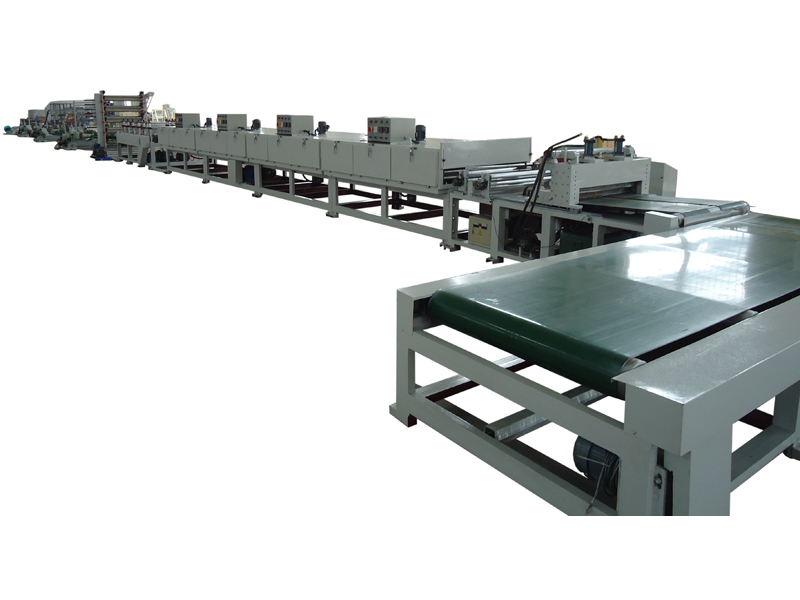
Drying stabilizes the material after wet processing or adhesive application. Its purpose is not simply to remove as much moisture as possible. A well-designed drying stage needs to achieve a controlled moisture condition without creating excessive thermal or mechanical stress. The main variables include:
| Parameter | Potential Effect |
|---|---|
| Drying temperature | Controls moisture removal rate |
| Airflow | Influences heat and moisture transfer |
| Residence time | Determines exposure to drying conditions |
| Board thickness | Affects moisture migration |
| Initial moisture | Determines drying demand |
The correct settings depend on the material and adhesive system. A universal drying temperature is therefore less useful than a process window established through production testing.
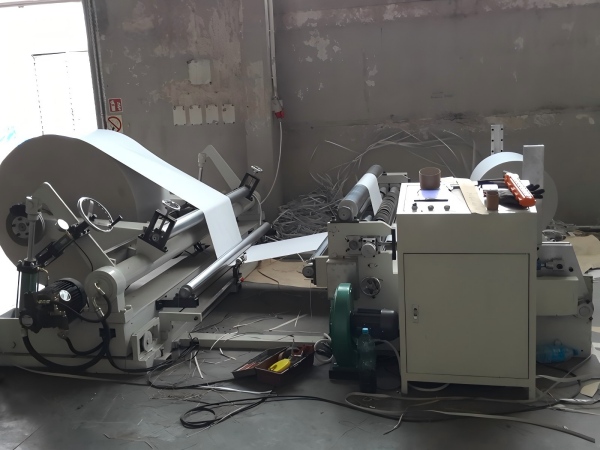
Not every production line receives raw material in the exact width required for finished products. Jumbo rolls may need to be divided into narrower rolls before further conversion. In such cases, a paper rewinding machine can form part of the upstream material-preparation process. Slitting and rewinding must maintain appropriate tension because the prepared roll becomes the input for later conversion. Poorly wound rolls can introduce telescoping, wrinkles, loose edges, or inconsistent tension. The quality of the prepared roll therefore directly affects downstream converting performance.
Roll preparation is more than simply reducing the width of an incoming jumbo roll. The slitting stage determines the condition of the rolls that will later enter the slip sheet converting process. The roll slitting process needs to account for paper thickness, web tension, knife configuration, winding pressure, and the required finished-roll width. Several defects can originate at this stage:
Uneven roll edges
Telescoping during rewinding
Loose or overly tight winding
Wrinkled web sections
Inconsistent roll width
These problems may not become obvious until the material reaches the downstream feeding and cutting system. Consequently, roll quality should be treated as an upstream quality-control point rather than an isolated preparation step.
Once the paperboard has reached the required physical condition, it can be converted into individual slip sheets. The conversion stage normally includes:
Feeding the material into the cutting system
Maintaining web alignment
Controlling feeding speed
Cross-cutting to the specified length
Separating and stacking finished sheets
At this stage, dimensional accuracy becomes especially important. A board with excellent mechanical strength can still fail to meet customer requirements if its finished dimensions are inconsistent.
Slip sheets are frequently used in automated material handling systems, where dimensional consistency helps equipment grip, position, and transport the load correctly. Cutting accuracy therefore influences both product quality and downstream logistics. The critical dimensions may include:
Overall sheet length
Overall sheet width
Edge squareness
Cutting repeatability
For high-volume production, even small variations can become commercially significant because they affect a large number of sheets over time.
After cutting, sheets are normally accumulated into organized stacks. The stacking system should avoid unnecessary impact or sliding that could damage edges or create uneven piles. Proper stack formation also simplifies subsequent packaging and warehouse handling. Manufacturers should define the desired stack height according to:
Sheet thickness
Manual handling requirements
Packaging method
Transport conditions
Customer unloading procedures
Higher production speed is attractive, but speed should be evaluated together with process stability. When the line operates faster, the available response time for tension correction, feeding, cutting, and stacking becomes shorter. If one section cannot maintain synchronization, quality problems may appear. A more useful production metric is therefore stable output at the required quality level rather than the maximum speed stated on a machine specification sheet.
A practical quality-control program can monitor the following variables:
| Inspection Item | Purpose |
|---|---|
| Thickness | Confirms structural consistency |
| Dimensions | Verifies customer specifications |
| Moisture | Controls dimensional and bonding stability |
| Bond strength | Evaluates layer integrity where applicable |
| Edge condition | Identifies cutting or handling problems |
| Stack alignment | Ensures efficient downstream handling |
Production data can then be used to identify recurring defects rather than relying solely on final inspection.
A paper slitting and rewinding machine is mainly associated with preparing roll material rather than directly forming the finished slip sheet. Its role becomes important when incoming rolls are too wide, when different roll widths are required, or when material needs to be rewound under controlled tension. Separating material preparation from final sheet conversion can make the overall production system more flexible, particularly when one factory supplies multiple slip sheet specifications.
Forming creates the board structure itself, while converting transforms an existing board or paper roll into the required commercial format. This distinction is useful when planning a factory. A manufacturer that purchases finished board rolls may only require converting equipment. A manufacturer that produces its own board must consider additional forming, bonding, drying, and finishing equipment. Understanding this boundary prevents unnecessary equipment investment.
The first stage depends on the production route. For purchased board rolls, manufacturing generally begins with roll preparation and feeding. For internally produced board, forming and bonding occur earlier.
Moisture influences dimensional stability, stiffness, bonding behavior, and drying requirements.
Not necessarily. The need for dedicated drying depends on the material structure and whether wet adhesive or other moisture-related processes are used.
A stable input roll helps the downstream line maintain consistent feeding, alignment, and cutting.
Typical checks include dimensions, thickness, moisture, bonding strength where applicable, edge quality, and stack alignment.
Yes, provided the machine's feeding and cutting ranges support the required specifications and the changeover procedure is suitable for the production schedule.