A finished paper slip sheet looks deceptively simple: a flat sheet of paperboard with enough stiffness to support a unit load. In production, however, converting a jumbo paper roll into a dimensionally stable slip sheet requires several coordinated operations. Web tension, sheet length, cutting accuracy, stacking, and material utilization all influence the quality of the final product. Understanding what happens inside the production line is particularly important for manufacturers evaluating equipment. The machine configuration determines not only how quickly paper can be processed, but also how consistently every sheet meets palletizing and automated handling requirements.
The process starts with a jumbo paper roll selected according to the required basis weight, thickness, strength, and final slip sheet specification. Before the roll enters the production line, operators typically verify:
Paper width and roll diameter
Paper grade and basis weight
Moisture condition
Core dimensions
Surface quality and edge condition
Required finished-sheet dimensions
These factors affect downstream processing. A roll with inconsistent moisture or damaged edges can create tension fluctuations, wrinkles, or uneven cuts even when the machine itself is correctly adjusted.
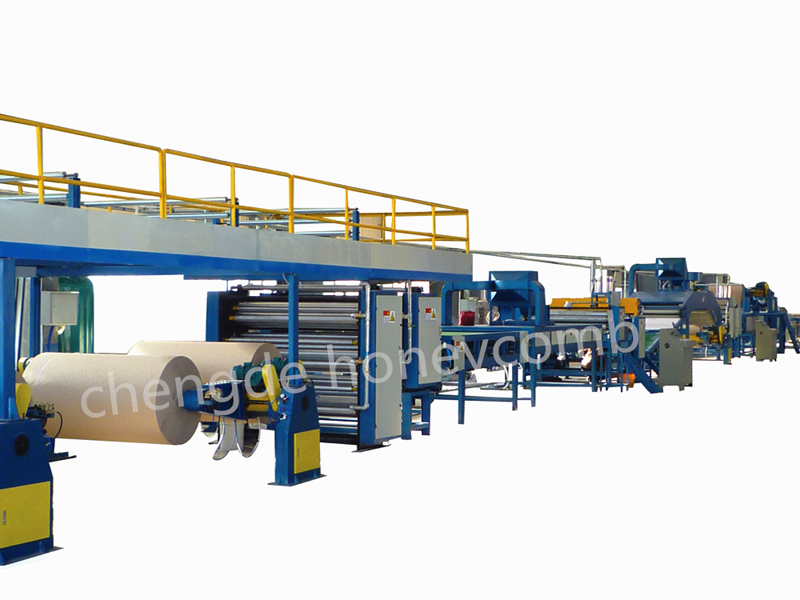
The jumbo roll is mounted on the unwinding section, where the material is gradually released into the production line. At this stage, tension control becomes critical. If web tension is too low, the paper can wander or form wrinkles. Excessive tension can stretch the material and contribute to dimensional variation. Modern lines therefore use controlled unwinding and guiding systems to keep the web aligned as it travels toward the cutting section. For plants handling different paper widths, a paper roll slitting machine can also be used upstream when the jumbo roll must first be converted into narrower rolls suitable for subsequent processing.
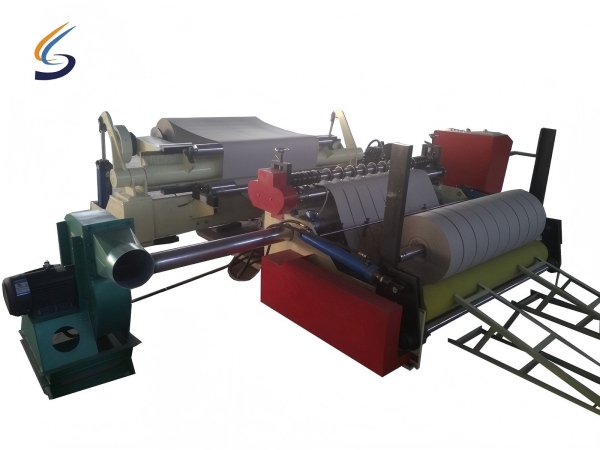
Once the paper leaves the unwinding section, it needs to travel through the line in a controlled position. An automatic web-guiding system can correct lateral movement and maintain alignment. This is important because even a relatively small deviation can become significant when thousands of sheets are produced. The feeding system must also maintain stable speed. Sudden acceleration or deceleration may cause:
Uneven sheet length
Paper buckling
Edge misalignment
Irregular stacking
The goal is not simply to move paper quickly. It is to create a predictable web path from the roll to the finished stack.
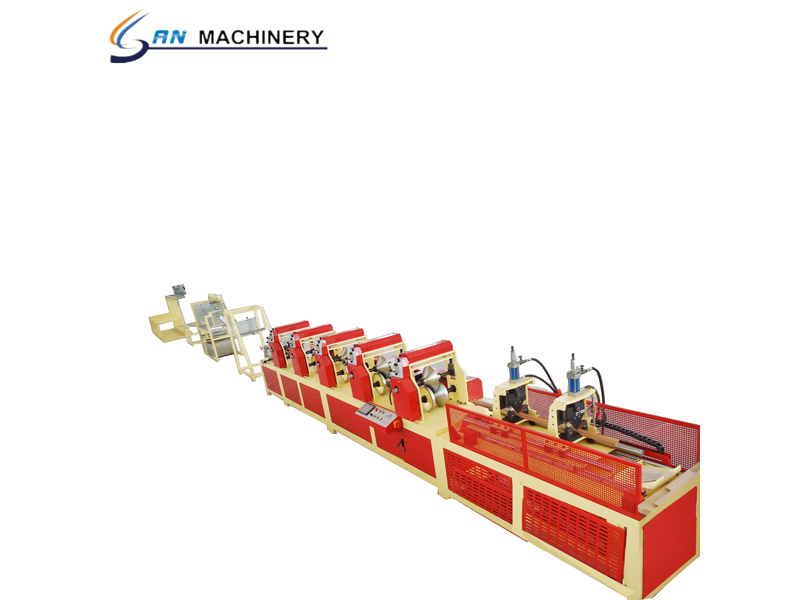
The continuous web is eventually divided into individual sheets according to the required length. Cutting accuracy is particularly important for slip sheets because the finished product must fit consistently beneath a palletized load. Variations can affect load positioning and may become more noticeable when the sheets are handled automatically. Depending on the production configuration, the cutting system can incorporate rotary or cross-cutting mechanisms. The machine must synchronize cutting speed with web speed so that the target sheet length remains stable throughout production. The resulting products are commonly supplied as paper slip sheets in different dimensions and configurations according to the customer's logistics requirements.
Quality control does not begin after cutting. It is built into multiple stages of the process. Key production variables include:
| Variable | Why It Matters |
|---|---|
| Web tension | Controls stability and helps prevent wrinkles or stretching |
| Web alignment | Maintains consistent sheet positioning |
| Cutting length | Determines dimensional accuracy |
| Cutting speed | Influences production capacity and synchronization |
| Paper condition | Affects feeding, cutting, and final stiffness |
| Stacking accuracy | Determines how easily finished sheets can be handled |
The important point is that these variables interact. Improving cutting speed, for example, is not necessarily beneficial if the feeding system cannot maintain stable tension at the higher operating speed.
After cross-cutting, individual sheets are transferred to the stacking section. Consistent stacking is essential because the final product is normally handled in batches rather than one sheet at a time. The stacking system should maintain:
Flat sheet surfaces
Aligned edges
Consistent stack height
Stable transfer without excessive impact
Poor stacking can create problems even when the cutting accuracy is excellent. Misaligned stacks may require manual correction before packaging or shipment.
Material efficiency is one of the most important economic factors in slip sheet production. Paper is usually one of the largest variable costs, so unnecessary trim and rejected sheets directly affect production economics. A properly configured line can reduce waste by coordinating:
Roll width with finished-sheet dimensions
Cutting patterns
Web alignment
Start-up and changeover procedures
Defect detection and rejection
For plants processing multiple specifications, production planning should consider the relationship between incoming roll dimensions and finished slip sheet sizes before the equipment is specified.
A general paperboard machine focuses on producing board material, while a slip sheet production line generally starts with prepared paper or paperboard rolls and converts them into finished sheets. This distinction matters when selecting machinery. A manufacturer purchasing equipment for slip sheet production does not necessarily need a complete board-forming system. The appropriate configuration depends on whether the factory produces the base board itself or purchases jumbo rolls from an external supplier.
Before requesting a machine quotation, manufacturers should define the actual production requirements rather than selecting equipment based only on nominal speed. Important specifications include:
| Requirement | Example Consideration |
|---|---|
| Raw material | Paper grade, thickness, basis weight |
| Input roll | Maximum width and diameter |
| Finished sheet | Length, width, and tolerance |
| Production capacity | Sheets per minute or output per shift |
| Changeover | Frequency of different sheet sizes |
| Stacking | Required stack height and handling method |
A machine designed around actual operating conditions is more likely to deliver stable production than one selected purely according to maximum theoretical speed.
Overall efficiency is the result of coordination between material preparation, unwinding, web guiding, feeding, cutting, and stacking. A high-speed cutting unit cannot compensate for unstable unwinding. Likewise, precise cutting has limited commercial value if the stacking system produces poorly aligned batches. For this reason, manufacturers should evaluate the production line as one integrated system rather than judging individual components independently.
Paperboard or strong paper-based sheet material is commonly used, with the exact grade selected according to load weight, handling conditions, and required stiffness.
Stable web tension helps prevent wrinkles, lateral movement, stretching, and dimensional variation during feeding and cutting.
Yes. The practical range depends on the machine configuration, cutting system, and changeover method.
Consistent dimensional accuracy is critical because sheets must fit the intended pallet and load configuration.
Waste can be reduced through appropriate roll sizing, optimized cutting patterns, stable web alignment, accurate tension control, and efficient changeovers.
Not necessarily. If the factory purchases suitable paperboard rolls, it can focus on converting those rolls into finished slip sheets rather than manufacturing the board itself.