A honeycomb paperboard machine should not be selected from a catalog by comparing maximum speed alone. The machine must match the board structure, paper characteristics, cell dimensions, finished panel size, adhesive system, and expected production volume. A mismatch in any of these areas can result in lower output, excessive waste, or a product that does not meet the required mechanical performance. For this reason, the most useful machine specification begins with the product—not the equipment.
Before contacting a machine supplier, manufacturers should establish the characteristics of the honeycomb board they intend to produce. At minimum, the specification should include:
Finished board thickness
Panel width and length
Honeycomb cell size
Paper grade
Paper basis weight
Adhesive type
Required surface layers
Target production capacity
These parameters determine the mechanical and process requirements of the equipment. A factory producing thin protective packaging panels, for example, may have very different requirements from a manufacturer producing thicker structural honeycomb panels.
Honeycomb paperboard relies heavily on the properties of the paper used to form the core and outer layers. Paper characteristics influence:
Cell formation
Adhesive penetration
Compression resistance
Panel stiffness
Machine running stability
A paper that performs well at one cell size may not behave identically when the geometry changes. Therefore, material trials should ideally be conducted using the actual paper grade intended for production.
Cell size is one of the most influential design variables in honeycomb board production. Smaller cells generally create a denser core structure, while larger cells can reduce material consumption and weight. However, cell geometry also affects forming behavior, bonding area, stiffness, and the final appearance of the panel. Manufacturers should therefore define the target cell size before specifying the machine rather than treating it as a secondary adjustment.
The required board thickness determines how much core material is needed and how the core interacts with the surface layers. Thicker honeycomb board may require different expansion, bonding, pressing, or lamination conditions than thin board. The machine specification should therefore state the desired thickness range instead of giving only one nominal value. A practical specification might distinguish between:
| Requirement | Why It Matters |
|---|---|
| Minimum thickness | Defines the lower production limit |
| Maximum thickness | Defines mechanical and process capacity |
| Thickness tolerance | Controls finished-board consistency |
| Core thickness | Determines structural characteristics |
| Surface-layer thickness | Affects overall board performance |
Production capacity should be expressed in terms that correspond to the factory's actual sales requirements. Instead of simply asking for a “high-speed machine,” manufacturers should define:
Required output per hour
Expected operating hours per shift
Number of production shifts
Product mix
Average changeover frequency
This produces a more realistic capacity target. For example, a machine with a high theoretical line speed may not deliver proportionally higher daily output if frequent product changes cause significant downtime.
Adhesive is not an independent consumable choice. It interacts directly with the machine and production process. The adhesive system affects:
Application method
Bonding speed
Drying requirements
Paper compatibility
Final board strength
A machine designed for one adhesive system may require modifications when another formulation is introduced. Manufacturers should therefore provide adhesive information during the equipment specification stage.
Some honeycomb paperboard products require kraft paper, linerboard, or another facing material to improve surface quality, stiffness, printability, or handling performance. In these applications, a cardboard honeycomb panels lamination machine may become an important part of the production configuration. The lamination requirement should be defined early because the required panel dimensions, adhesive application, feeding method, and production speed can influence the complete line layout.
Automation should be determined by production volume, labor availability, product variety, and desired consistency. A basic system may be appropriate for lower-volume production with frequent manual intervention. Higher-volume factories may benefit from automated feeding, gluing, forming, cutting, stacking, and control systems. However, adding automation indiscriminately can increase investment without improving the factory's actual bottleneck. The better question is: **Which production steps currently limit output, quality, or labor efficiency?**
Finished panel dimensions influence material consumption, cutting requirements, transfer systems, and packaging. The specification should identify:
| Dimension | Specification Consideration |
|---|---|
| Panel width | Required finished width and tolerance |
| Panel length | Required finished length and cutting method |
| Thickness | Core and facing structure |
| Edge quality | Downstream packaging or assembly requirements |
If several panel sizes will be manufactured, the supplier should understand the complete size range before recommending a configuration.
A useful technical specification should cover more than machine dimensions. It should include:
Raw material specifications
Cell size range
Finished board thickness
Maximum and minimum panel dimensions
Target production capacity
Adhesive requirements
Lamination requirements
Cutting requirements
Automation level
Power and utility requirements
Changeover expectations
Quality tolerances
This information allows machine suppliers to propose equipment based on the actual production objective rather than a generic model.
The machine should be evaluated as part of the complete workflow. Depending on the product, the production system may involve:
Paper preparation
Core forming
Adhesive application
Expansion
Lamination
Pressing
Cutting
Stacking
For manufacturers comparing a honeycomb paperboard machine, the key question is whether the proposed configuration can maintain the required quality throughout this sequence.
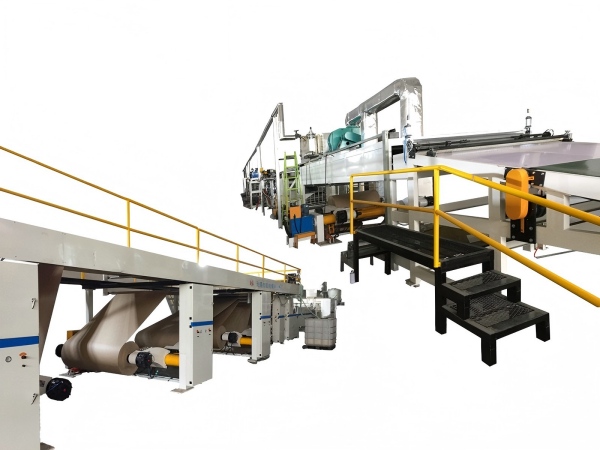
The terminology varies among suppliers and markets. Some manufacturers use “honeycomb paper machine” to describe equipment focused on producing honeycomb core or expanded paper material, while “honeycomb board machine” can refer to a broader board-production configuration. A paper honeycomb machine may therefore be more appropriate for factories focused on honeycomb paper or core production, whereas a complete board line may incorporate additional lamination and finishing stages. The technical configuration, rather than the product name alone, should determine whether a machine is suitable.
The main requirements are paper grade, cell size, board thickness, panel dimensions, adhesive system, production capacity, and required automation.
Yes. Cell geometry influences forming behavior, material consumption, bonding area, and the characteristics of the finished board.
It may require different forming, expansion, bonding, pressing, or handling configurations depending on the target structure.
Not for every application. It depends on the required surface properties, stiffness, appearance, and downstream use.
Ideally, yes. Material trials can reveal feeding, forming, bonding, and drying behavior that cannot always be predicted from paper specifications alone.
No. Stable output at the required product specifications is generally more meaningful than theoretical maximum speed.